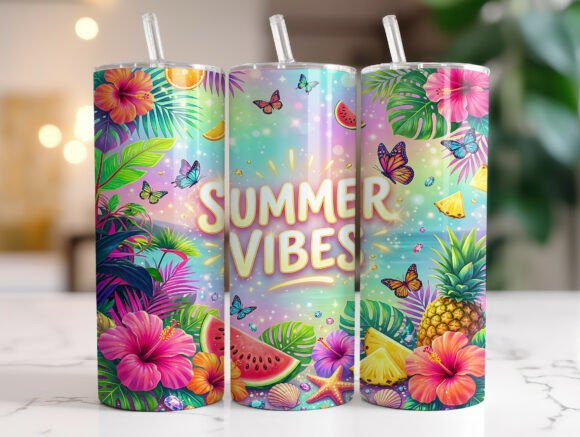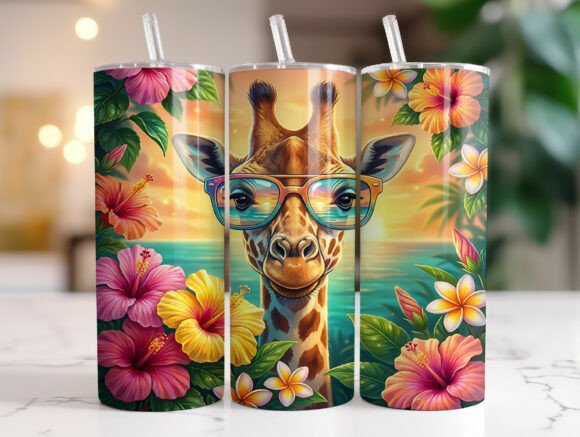
Summer Giraffes Tropical Flowers Tumbler Design Review
As a designer who spends more time staring at stitch maps than most people care to admit, I approach every new digital embroidery file with a mix of curiosity and skepticism. We have all bought a design that looked vibrant on the screen but turned into a bird's nest of thread breaks and puckering on the fabric. Today, I am taking a close look at the Summer Giraffes Tropical Flowers Tumbler graphic. While this asset is marketed primarily as a high-resolution PNG for sublimation or printing on 20oz skinny tumblers, my mind immediately goes to a different place: how can we adapt this whimsical, tropical aesthetic for actual needle-and-thread projects?
The first impression of this design is undeniably cheerful. The layout features giraffes mingling with lush tropical blooms, creating a mood that screams "vacation mode" or "nursery joy." At 9.3 inches by 8.2 inches, the scale is substantial. For a machine embroidery design, this is a large footprint. It suggests that this isn't a subtle accent; it is a statement piece. If you are an Etsy seller or a small shop owner looking to expand beyond standard tumbler wraps, this graphic offers a fantastic foundation for a summer collection, provided you understand the technical translation from print to stitch.
Visual Personality and Project Fit
The visual personality here is soft, organic, and playful. The curves of the giraffe spots and the petals of the flowers lend themselves beautifully to satin stitch borders and varied fill stitch densities. However, because this originates as a Graphics file intended for Tumbler Wraps, it lacks the inherent stitch data of a dedicated embroidery file. This means if you plan to use this for a handmade product like a tote bag or a sweatshirt, you are likely looking at digitizing it yourself or hiring a digitizer to convert those crisp 300 DPI lines into a viable stitch path.
Imagine a scenario where a client requests a custom personalized gift for a baby shower. They love the safari theme but want something tactile rather than printed. This design would be perfect for a large embroidered patch sewn onto a nursery blanket or a wall hanging. The size allows for significant detail in the floral elements, which could be rendered in vibrant thread colors that pop against a neutral linen background. For a boutique selling custom apparel, this could be the centerpiece of a limited-edition summer hoodie, appealing to customers who want unique, non-mass-produced items.
Real-World Application and Fabric Considerations
When moving from a digital mockup to a finished product, the substrate matters immensely. The original specification notes this is perfect for a 20oz skinny tumbler, which is a smooth, curved surface. Translating this to fabric introduces variables. If you are attempting this on a tote bag design made of heavy canvas, the large size works well. The sturdy fabric can support the weight of the stitching without excessive distortion. However, if you are aiming for baby embroidery on a onesie, the 9.3-inch width is simply too large and too heavy. In that case, you would need to scale the design down significantly, which risks losing the fine details of the tropical flowers.
Texture is another critical factor. A sweatshirt embroidery project using fleece requires careful attention to stitch density. If the digitized version of this design is too dense, the fleece will bunch up, and the giraffe's legs might disappear into the pile. Conversely, on a thin poly-cotton blend, a lack of proper stabilizer could lead to severe puckering, ruining the clean lines of the graphic. I always recommend running a test stitch-out on scrap fabric that matches your final material. Check how the running stitch outlines hold up and whether the fill areas lay flat.
Navigating Technical Challenges
There are specific areas where caution is advised. The intricate corners of the leaves and the small details within the giraffe patterns are potential trouble spots. In a printed PNG, these are just pixels; in embroidery, they are physical threads that can easily snag or break if the columns are too narrow. If you are adapting this for a cap, the curved surface adds another layer of complexity. A design of this magnitude rarely fits well on a standard front panel without warping. It might be better suited for the side panels of a bucket hat or the back of a baseball cap where there is more real estate.
Furthermore, consider the end-user experience. If this design is applied to a kitchen towel or an apron intended for frequent washing, the durability of the stitch becomes paramount. High-density areas might become stiff and uncomfortable against the skin or crack over time. For items like holiday embroidery gifts that are meant for display rather than heavy use, such as a decorative pillow cover, these concerns are less critical, allowing for more artistic freedom with thread choices and texture.
Enhancing Brand Value and Customer Trust
For creative entrepreneurs, the quality of your design assets directly impacts your brand consistency. Using a high-quality source image like the Summer Giraffes Tropical Flowers Tumbler ensures that even when converted to stitches, the proportions remain accurate. A sloppy adaptation can make a small shop product look amateurish. By taking the time to properly digitize or select a compatible embroidery version, you signal professionalism to your buyers. They aren't just buying a shirt; they are buying a piece of art that was thoughtfully executed.
This design also holds strong potential for printable mockups before you ever commit to thread. You can place the PNG on various garment templates to show clients exactly how the custom apparel will look. This visual confirmation builds trust and reduces the likelihood of returns due to misplaced expectations. It allows you to sell the concept as a design asset or a pre-order item, gauging interest before investing in materials.
Practical Notes for the Studio
Before you hoop up, keep these practical steps in mind:
- Verify Licensing: Since this is sold as an instant download graphic, confirm the license terms. Does it allow for commercial use in physical goods? Some artists restrict the sale of finished items made from their digital files.
- Check Contrast: Test the design in black and white. If the giraffe blends into the flowers in grayscale, you may need to adjust thread shades to ensure definition in the stitched version.
- Hoop Size Reality: Ensure your machine can handle the dimensions. A 9x8 design requires a large hoop, possibly a jumbo or mega hoop depending on your machine brand.
- Stabilizer Strategy: For a design of this size, a cut-away stabilizer is often safer than tear-away, especially for stretchy fabrics, to prevent long-term distortion.
- Thread Selection: Stick to high-quality rayon or polyester threads. The tropical theme demands saturation; cheap threads will look dull and fail to capture the vibrancy of the original PNG.
In conclusion, while the Summer Giraffes Tropical Flowers Tumbler is technically a graphic file, its potential extends far beyond sublimation cups. With the right technical approach, it can become a standout element in your commercial embroidery catalog. Whether you are creating a whimsical patch for a denim jacket or a central motif for a nursery quilt, the key lies in respecting the transition from pixel to thread. By paying attention to fabric texture, stitch density, and finishing details, you can transform a simple download into a cherished heirloom that customers will love.