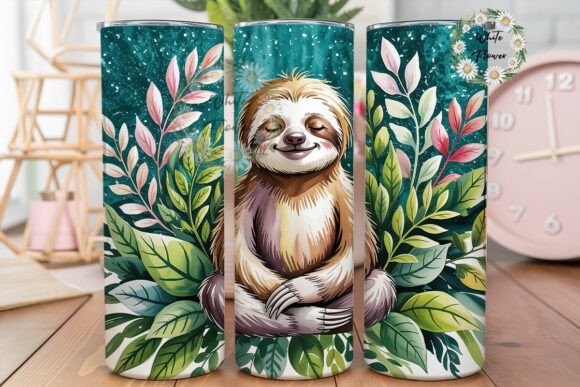
Review: Peaceful Sloth Floral Glitter Tumbler Design
As a designer who spends more time staring at stitch maps than most people care to admit, I approach every new digital embroidery file with a mix of curiosity and skepticism. When I first opened the Peaceful Sloth Floral Glitter Tumbler, my initial reaction wasn't just about the cute factor—though let's be honest, sloths are universally beloved—but about its potential utility in a real-world craft business. This isn't just a graphic; it is a blueprint for a handmade product that needs to withstand washing, wearing, and the critical eye of a paying customer.
The design presents a whimsical yet sophisticated mood. The combination of a relaxed sloth with floral elements suggests a "slow living" aesthetic that is currently dominating social media trends. However, the inclusion of "glitter" in the title immediately raises technical questions for an embroiderer. In the world of machine embroidery design, simulating glitter usually means relying on specific fill stitch patterns, metallic threads, or perhaps even an applique design using glitter fabric. Understanding how this visual effect translates from a screen to a physical finished product is crucial before you commit to stitching it out for a client.
Visual Personality and Layout Analysis
The layout of the Peaceful Sloth Floral Glitter Tumbler feels intentional. It doesn't just slap a character on a background; it integrates the flora around the subject to create a cohesive frame. For those of us creating custom apparel or tote bag design concepts, this kind of composition is gold. It allows the design to breathe without looking sparse. The flow of the flowers guides the eye naturally to the sloth, which serves as the focal point.
When evaluating this for a small shop product line, I immediately thought about how it would look on a oversized crewneck sweatshirt. The organic shapes of the leaves pair beautifully with the soft drape of French terry cotton. However, because this asset is categorized under Tumbler Wraps and Graphics, there is a distinct possibility that the original intent was sublimation or printing. If you are adapting this for embroidery, you must scrutinize the stitch density. A design meant for print might have gradients and fine details that simply cannot be replicated with thread. You may need to simplify certain areas or convert complex shading into solid blocks of color using satin stitch borders and textured fills.
Real-World Application Scenarios
Let's talk about a concrete scenario. Imagine a customer approaches your Etsy seller shop requesting a personalized gift for a new mother who loves nature and takes things slow. The Peaceful Sloth Floral Glitter Tumbler is perfect for a nursery decor piece, such as a wall hanging or a decorative pillow cover. In this context, the "glitter" aspect can be achieved by using a high-sheen rayon thread or a metallic blend for the floral accents, giving that sparkle without the shedding issues of actual glitter fabric.
Another strong use case is holiday embroidery gifts. During the Q4 rush, efficiency is key. If this design stitches out cleanly with minimal trims, it becomes a viable option for batch production. I could see this working wonderfully on canvas aprons for a boutique bakery or as a chest logo on a zip-up hoodie for a yoga studio. The versatility lies in its neutral yet engaging theme. It fits the "boho-chic" demographic that drives so much of the current commercial embroidery market.
However, if you are considering this for an embroidered patch, you need to be careful with the outer edges. Designs with sprawling floral elements often require a clean merrow edge or a tight satin border to prevent fraying over time. Ensure the digitization supports a clear perimeter for cutting.
Technical Considerations and Fabric Compatibility
Here is where experience matters most. Not every fabric plays nice with every design. The Peaceful Sloth Floral Glitter Tumbler likely has areas of varying density. If you attempt to stitch this on a stretchy performance tee or a thin baby onesie without proper preparation, you risk puckering and distortion.
- Fabric Texture: On textured fabrics like waffle knit or heavy denim, fine details in the sloth's face might get lost. Test on a scrap piece first.
- Stabilizer Selection: For a design of this nature, a cut-away stabilizer is almost always safer than tear-away, especially if the finished product will be washed frequently. This ensures the embroidery project maintains its shape.
- Thread Colors: Check the color contrast. If the sloth is a similar shade to the background fabric, the definition will vanish. Consider outlining key features with a slightly darker or lighter thread to pop the image.
- Small Details: Tiny lettering or intricate leaf veins can turn into a bird's nest of thread if the running stitch lengths are too long or the density is too high for the needle size.
It is also worth noting that curved surfaces, like caps, present a unique challenge. The distortion inherent in cap framing can warp the circular or flowing nature of floral designs. Unless you have significant experience with cap digitizing, I would recommend sticking to flat garments like t-shirts, sweatshirt embroidery projects, or home decor items for this specific artwork.
Enhancing Brand Value and Customer Trust
In the competitive landscape of design assets and handmade goods, consistency is king. Using a high-quality, well-thought-out design like the Peaceful Sloth Floral Glitter Tumbler signals professionalism. Customers can tell when a design looks "off"—whether the stitches are gapping, the colors clash, or the proportions are weird. A clean, crisp execution builds trust.
Furthermore, the visual appeal of this design directly impacts the perceived value of your personalized gift. A well-executed sloth design feels premium. It moves beyond a generic commodity and becomes a keepsake. For Etsy sellers and creative entrepreneurs, this distinction is what allows you to charge a higher price point. It transforms a simple piece of clothing into a story about relaxation, nature, and care.
Practical Designer Notes for Implementation
Before you list this as a printable mockup or start stitching for orders, take these practical steps:
- Test on Scrap: Always run a test stitch-out on the exact fabric you intend to sell. What looks good on cotton might fail on polyester.
- Check Licensing: Since this is a graphic asset potentially adapted for embroidery, confirm the license terms. Can you sell the physical item? Can you sell the digitized file? Never assume.
- Mockup Verification: Create black-and-white mockups to check contrast. If the design disappears in grayscale, it lacks sufficient tonal range for embroidery.
- Hoop Size Confirmation: Ensure your machine's hoop capacity can handle the full design without excessive re-hooping, which can lead to alignment errors.
- Density Review: If the design feels stiff after stitching, the density is too high. Adjust your settings or consult the digitizer if possible.
Ultimately, the Peaceful Sloth Floral Glitter Tumbler offers a charming foundation for a variety of baby embroidery projects, adult leisurewear, and home accents. Its success, however, relies entirely on the skill of the maker translating a graphic concept into a tactile reality. By respecting the limitations of the medium and leveraging the strengths of the design, you can create products that not only look beautiful but stand the test of time.