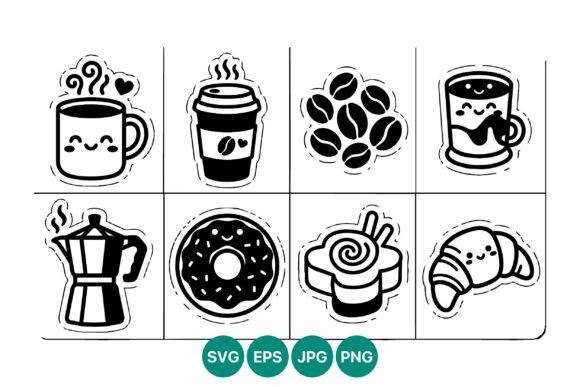
Review: Kawaii Coffee Cup Donut Sushi Line Art for Embroidery
As a designer who spends more time staring at stitch simulations than actual sunlight, I am always on the lookout for graphics that translate well from screen to thread. Recently, I got my hands on the Kawaii Coffee Cup Donut Sushi Line Art collection to evaluate its potential for real-world embroidery projects. This isn't just about whether the image looks cute on a website; it is about whether these Illustrations and Graphics can withstand the tension of a hoop, the pull of the needle, and the scrutiny of a paying customer.
The first impression of this collection is undeniably charming. The mood is light, playful, and universally appealing. We are looking at a set of black and white line art icons featuring a smiling coffee cup, to-go cup, coffee beans, mug, moka pot, donut, sushi, and croissant, all sporting those signature simple cute faces. For an embroidery designer, line art is a double-edged sword. It offers clarity and a modern aesthetic, but it demands precision. If the lines are too thin, they vanish into the fabric texture. If they are too thick, the design loses its delicate "kawaii" personality.
Visual Personality and Stitch Potential
The visual personality of the Kawaii Coffee Cup Donut Sushi Line Art leans heavily into minimalism. In the world of digital assets, this is often called "line art," but when we talk about converting this into a machine embroidery design, we have to think in terms of running stitch or very fine satin stitch columns. The simplicity of the faces—usually just two dots for eyes and a curved line for a smile—is perfect for embroidery because it reduces the risk of thread breaks and bird nests compared to highly detailed portraits.
However, the lack of internal fill means the background fabric becomes part of the design. This is crucial for product value. When you embroider these icons on a high-quality linen tote or a soft cotton sweatshirt, the fabric texture shows through, giving the finished product a breathable, organic feel that resonates with buyers looking for handmade products. It feels less like a sticker slapped on a garment and more like an integral part of the item.
Real-World Application: The Cafe Tote Scenario
To truly test this collection, I imagined a specific client request: a local independent coffee shop wanted a run of reusable tote bags for their loyalty program. They needed something that screamed "morning routine" without being overly corporate. This is where the Kawaii Coffee Cup Donut Sushi Line Art shines.
I envisioned placing the smiling coffee cup and the happy croissant side-by-side on a natural canvas tote bag design. Because the icons are distinct and have plenty of negative space, they would work beautifully as a clustered arrangement or as individual motifs scattered across the bag. For a small shop product like this, the design adds immediate brand recognition. Customers seeing that cute smiling mug on a bag are likely to engage with it, perhaps even snapping a photo for social media, which drives free marketing for the cafe.
Beyond totes, these Graphics are ideal for custom apparel. Imagine a oversized crewneck sweatshirt with a small embroidered donut on the left chest. It's a subtle nod to the wearer's love for sweets and comfort. For Etsy sellers, this versatility is gold. You can offer these as add-ons to baby onesies (baby embroidery), kitchen tea towels, or even zippered pouches. The universal appeal of food and coffee means your target market is practically everyone.
Navigating Technical Challenges
While the aesthetic is strong, we must discuss the technical realities of stitching line art. The Kawaii Coffee Cup Donut Sushi Line Art relies on clean outlines. If you are digitizing these yourself from the provided vector or raster files, you need to be mindful of stitch density. A single run of stitching might look great on screen but could get lost on a textured towel or a fuzzy fleece hoodie.
There are specific scenarios where you need to proceed with caution. If you are working with dark fabric, standard black thread might not provide enough contrast if the line weight is too fine. Conversely, using white thread on black fabric requires a sharp eye; any misalignment in the digitizing will be glaringly obvious. Furthermore, stretchy fabrics like jersey knits used in t-shirts can distort thin lines if the stabilizer isn't up to the task. For these materials, I recommend using a cut-away stabilizer rather than tear-away to ensure the design holds its shape after multiple washes.
Curved surfaces present another hurdle. Placing these icons on a cap or hat requires careful positioning. The smiling face of the sushi roll might look distorted if placed too close to the seam of a baseball cap. Always mock up your design on a 3D model or physically pin it to the garment before hooping. Additionally, tiny details like the steam rising from the moka pot or the sesame seeds on the bun might need to be simplified or slightly enlarged to survive the stitching process without breaking threads.
Enhancing Brand Consistency and Customer Trust
Using cohesive design assets like this collection helps build brand consistency. If you are an Etsy seller specializing in kitchen decor, having a matching set of coffee and pastry icons allows you to create themed bundles. A customer buying a "Breakfast Set" comprising a mug rug, an apron, and a tea towel feels they are getting a curated experience. This perception of thoughtfulness increases the perceived value of your handmade product and fosters customer trust.
For commercial embroidery projects, professionalism is key. The clean lines of the Kawaii Coffee Cup Donut Sushi Line Art project a modern, tidy image. Sloppy, pixelated, or overly complex designs can make a business look amateurish. These icons, by virtue of their simplicity, demand high-quality execution, which in turn reflects well on the maker. Whether it is a personalized gift for a barista friend or a bulk order for a bakery, the clarity of the design ensures the final result looks intentional and polished.
Practical Notes for the Working Designer
Before you commit to stitching these on a client's expensive garment, here are a few practical steps I always take:
- Test on Scrap Fabric: Always stitch out the design on the exact same type of fabric you intend to use for the final product. Thread behaves differently on denim than it does on silk.
- Check Contrast: Review your thread colors against the fabric. Sometimes a dark gray works better than pure black on certain materials to soften the look while maintaining visibility.
- Verify Hoop Size: Ensure the design fits comfortably within your available hoop size without needing excessive re-hooping, which can lead to alignment issues.
- Inspect Small Details: Zoom in on the digitized file. Are the eyes of the characters too close together? Will the thread bridge the gap? Adjustments may be needed before stitching.
- Licensing Check: Since this is a collection of Illustrations and Graphics, confirm the licensing terms. Can you sell the physical embroidered items? Can you sell the digital files? Never assume; always read the included documentation.
- Mockups: Create printable mockups or digital previews for your customers. Showing them how the smiling coffee cup looks on a navy blue apron versus a cream-colored tote can help close the sale faster.
In conclusion, the Kawaii Coffee Cup Donut Sushi Line Art is a versatile and delightful resource for the modern embroidery entrepreneur. It bridges the gap between digital trendiness and tactile craftsmanship. While it requires a respectful approach to digitizing and material selection, the payoff is a range of products that feel fresh, friendly, and commercially viable. Whether you are decorating a nursery, outfitting a cafe staff, or building your holiday inventory, these little smiling icons have the power to bring joy to both the maker and the receiver.