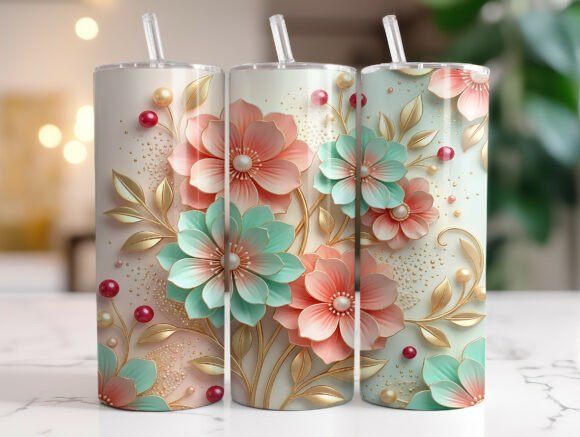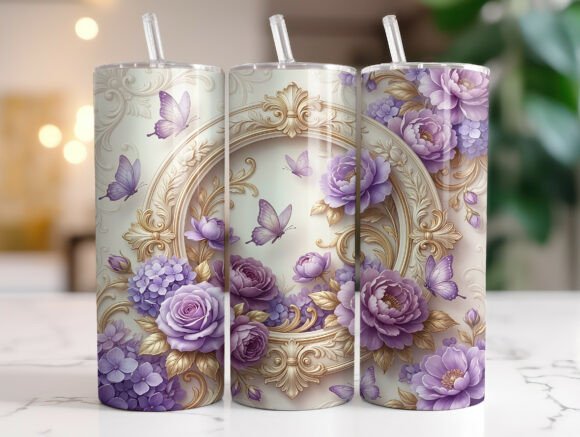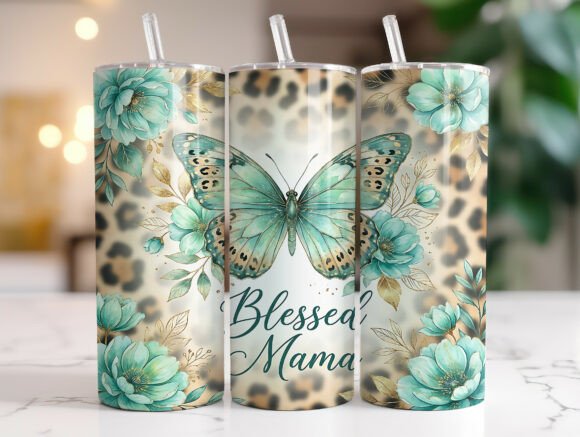
Pastel Butterfly Rose Floral Tumbler PNG Review
As a designer who spends more time staring at stitch maps than most people care to admit, I approach every new digital embroidery file with a mix of curiosity and skepticism. We have all been there: you download a beautiful graphic, convert it, or purchase a pre-digitized design, only to find that what looked stunning on the screen turns into a puckered mess on the fabric. Today, I am taking a close look at the Pastel Butterfly Rose Floral Tumbler PNG. While this asset is marketed primarily for Tumbler Wraps and sublimation, my goal is to evaluate its potential as a foundation for real-world embroidery projects, specifically for those of us running small shops or creating high-end handmade goods.
First Impressions: Mood and Aesthetic Potential
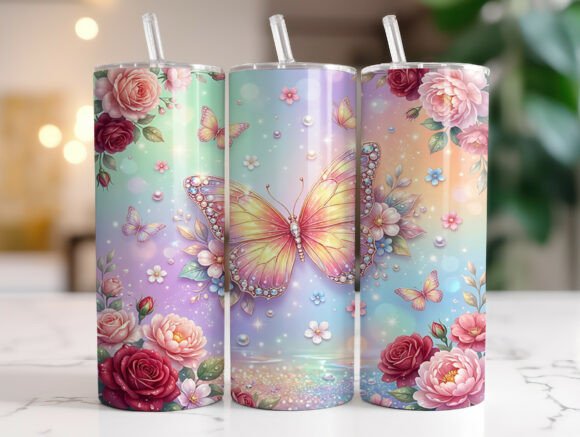
When I first opened the high-resolution files included in this package, the immediate takeaway was the softness of the palette. The "pastel" descriptor is accurate; we are looking at muted pinks, gentle lavenders, and sage greens that evoke a spring garden or a nursery setting. The composition features a butterfly resting among roses, a classic motif that never truly goes out of style but can easily feel dated if the execution is poor. Here, the layout feels balanced. The flow from the floral elements to the wing details suggests a natural movement that would translate beautifully into satin stitch borders or soft fill stitch areas.
For an Etsy seller or boutique owner, the visual personality of this design screams "personalized gift." It lacks the harsh lines of modern geometric trends, opting instead for a romantic, organic feel. This makes it an ideal candidate for baby showers, bridal gifts, or spring collections. However, because this is provided as a Graphics file (PNG) rather than a native machine format, the responsibility falls on the digitizer or the user to interpret these pixels into threads correctly. The 300 DPI resolution is a strong starting point, ensuring that when you trace or auto-digitize, you aren't working with blurry edges that compromise stitch definition.
Real-World Application: From Screen to Stitch
Let's move beyond theory and talk about a specific scenario. Imagine a client requests a custom embroidered tote bag for a local farmer's market vendor. They want something feminine but durable. The Pastel Butterfly Rose Floral Tumbler PNG offers a great base image for this. Because the design includes both straight and tapered versions (originally intended for different tumbler curves), you have flexibility in how you arrange the elements for a flat surface like a tote or a pillow cover.
If I were preparing this for a sweatshirt embroidery project, I would focus on the rose details. In a real stitching scenario, large areas of solid color in a PNG often need to be broken up with texture stitches to prevent the "cardboard effect" where the fabric becomes stiff. The butterfly wings, with their inherent pattern, are perfect for demonstrating skill with varying thread colors and density. For a custom apparel line, this design could serve as a chest pocket accent on a denim jacket or a central motif on a linen apron. The key is recognizing that while the source file is a graphic, the end result relies entirely on how well you translate those gradients into distinct thread shades.
For those selling printable mockups or digital previews before committing to production, these files are invaluable. You can place the PNG onto a photo of a finished hoodie or cap to show clients exactly what the color story will look like. This builds trust and helps manage expectations before a single needle hits the fabric.
Technical Considerations and Fabric Challenges
Here is where experience matters most. Taking a graphic meant for a smooth, hard surface like a tumbler and moving it to textured fabric requires caution. The Pastel Butterfly Rose Floral Tumbler PNG contains fine details in the butterfly antennae and the petal edges. If you attempt to stitch this on a highly textured fabric like a looped towel or a thick wool blend without proper stabilization, those tiny details will get lost.
I strongly advise testing this design on scrap fabric first. Pay close attention to stitch density. Pastel colors often require lighter coverage to maintain their soft look, but if the density is too low on a dark fabric, the background will show through, ruining the illusion. Conversely, too much density on a stretchy knit, like a baby onesie, will cause the garment to pucker permanently. For baby embroidery, I would recommend simplifying the inner details of the roses and using a softer underlay to ensure comfort against sensitive skin.
Curved surfaces present another hurdle. While the "tapered" PNG file is designed to wrap around a 20oz skinny tumbler, applying this logic to a curved cap brim is different. The distortion needed for a cylinder does not always match the compound curve of a hat. If you are doing cap embroidery, you may need to manually adjust the aspect ratio of the graphic before digitizing to ensure the butterfly doesn't look squashed once stitched.
Maximizing Value and Professionalism
The ultimate test of any design asset is whether it elevates the perceived value of the finished product. A well-executed version of this butterfly and rose motif can turn a standard canvas tote into a boutique item worth double the price. Customers respond to clarity and cohesion. If the thread transitions are smooth and the stabilizer is trimmed cleanly, the design looks professional. If the edges are frayed or the colors clash due to poor thread selection, it looks amateurish.
For commercial embroidery projects, consistency is key. If you plan to use this across a collection—say, matching tea towels and oven mitts—you must document your thread chart meticulously. The pastel hues in the PNG might look consistent on your monitor, but thread brands vary wildly. What looks like a dusty rose in the graphic might stitch out as a bright pink if you aren't careful. Always compare light and dark fabric backgrounds during your testing phase. A design that pops on white might vanish on navy blue unless you add a white underlay or adjust the outline thickness.
Final Verdict for Makers and Designers
The Pastel Butterfly Rose Floral Tumbler PNG is a versatile asset, but it is not a magic button. It is a high-quality raw material that requires a skilled hand to transform into a superior handmade product. It shines brightest in applications where its soft aesthetic can be fully appreciated, such as nursery decor, spring fashion, and personalized gifts. However, users must respect the limitations of converting graphics to stitches. Check your licensing terms regarding commercial use before selling items made from this design, as rules can vary between marketplaces.
Before launching this as a star product in your craft business, take the time to digitize it with intention. Consider the hoop size limitations of your machine; while the original dimensions are roughly 9.3" x 8.2", you may need to scale it down for smaller items like patches or cuffs. Inspect the small details closely—will those tiny leaf veins stitch out clearly, or should they be simplified? By treating this PNG as a blueprint rather than a final solution, you can create stunning, durable, and profitable items that customers will love. Whether you are decorating a kitchen towel or branding a line of boutique apparel, this design has the potential to be a standout favorite if handled with the right technical care.